
Are Crooked Teeth Really That Bad? Your Dulles Dentist Explains Why
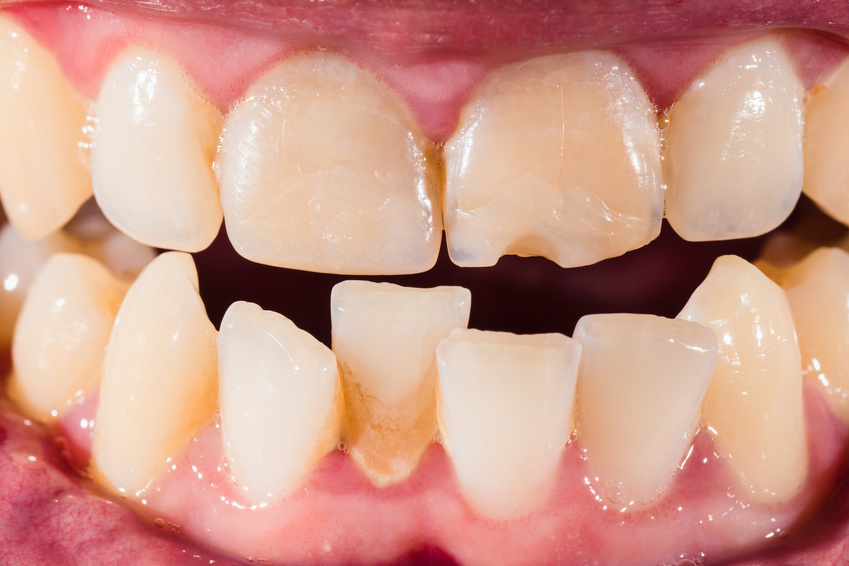
Plenty of people grow up with crooked teeth and get along just fine — or so it seems. But here is a question worth asking honestly: are crooked teeth purely a cosmetic issue, or are they a genuine health concern?
The short answer, according to current clinical research, is that untreated misalignment is a real health risk — not just for your smile, but for your gums, jaw, digestion, and even your confidence. A 2024 review published in the Journal of Oral Hygiene and Health confirmed that dental malocclusion, left untreated, can lead to decay, gum disease, jaw joint issues, and measurable impacts on quality of life.
First: What Actually Causes Crooked Teeth?
Crooked teeth, clinically known as malocclusion, develop for a variety of reasons, most of which are outside your control:
- Genetics: The most common cause. Jaw size and tooth size are largely inherited traits.
- Jaw size evolution: Research suggests human jaws have become smaller over generations, leaving less room for a full set of adult teeth.
- Childhood habits: Prolonged thumb-sucking, pacifier use past age 3, or tongue-thrusting can push teeth out of alignment during development.
- Tooth loss: When a tooth is lost and not replaced, neighboring teeth gradually drift into the gap.
- Trauma or injury: A blow to the mouth can knock teeth out of position or damage supporting bone structure.
- Poor dental restorations: Ill-fitting crowns, bridges, or fillings can alter bite mechanics and shift neighboring teeth over time.
- Gum disease: Advanced periodontal disease weakens the bone supporting teeth, allowing them to shift or loosen.
Health Risk #1: Your Bite Mechanics Break Down
When teeth do not meet properly, the result is a misaligned bite. An uneven bite distributes chewing forces unevenly, meaning some teeth absorb far more pressure than they are designed to handle, leading to accelerated wear, cracked or fractured teeth, difficulty chewing, and jaw muscle fatigue causing chronic headaches.
Health Risk #2: TMJ Disorders — Jaw Pain That Radiates Everywhere
One of the more serious downstream effects of crooked teeth is its connection to temporomandibular joint (TMJ) disorders. The TMJ is the hinge joint connecting your jaw to your skull. When your bite is uneven, it absorbs unbalanced loads with every chew, yawn, and word you speak.
A 2024 cross-sectional study found that Class II and Class III malocclusion increased the risk of TMJ disorder by 1.69 times compared to normally aligned bites. Symptoms include:
- Chronic jaw pain or soreness, especially in the morning
- Clicking or popping sounds when opening the mouth
- Tension headaches and migraines
- Earaches or ringing in the ears
- Difficulty opening the mouth wide or limited jaw movement
- Neck and shoulder muscle tightness
Health Risk #3: A Breeding Ground for Bacteria
Crooked, crowded, or overlapping teeth create physical geometry that makes proper cleaning extremely difficult. Toothbrush bristles and floss struggle to reach tight angles between misaligned teeth and that is where bacteria thrive.
- Plaque accumulation: Plaque in hard-to-reach areas hardens into tartar, which cannot be removed by brushing.
- Cavities: Bacteria produce acids that erode enamel, and the process accelerates in crowded areas.
- Gingivitis: Gum inflammation from bacterial buildup at the gumline — the first stage of gum disease.
- Periodontitis: If gingivitis is left untreated, it can advance to periodontitis, destroying the bone supporting your teeth.
| Why this matters beyond your mouth: Research has established links between periodontal disease and systemic health conditions including cardiovascular disease, diabetes complications, and adverse pregnancy outcomes. The bacteria that drive gum disease enter the bloodstream. Keeping your teeth properly aligned is one practical way to keep your gums healthier and reduce this systemic risk. |
Health Risk #4: Speech and Digestion
Teeth play a structural role in how sounds are formed. Misaligned front teeth can interfere with tongue and lip placement, making certain sounds more difficult. Lisps and difficulty with “s,” “z,” “th,” and “f” sounds are commonly associated with bite and alignment issues. On digestion: teeth that do not meet efficiently mean food is less thoroughly broken down before swallowing, potentially contributing to digestive discomfort over time.
Health Risk #5: The Confidence Gap Is Real
Nearly 99.7% of American adults believe a healthy smile is an important social asset. A 2024 study in BMC Oral Health found that malocclusion had measurable negative impacts on self-perception, social interaction, and emotional wellbeing, particularly in adolescents and younger adults. Addressing the alignment issue directly addresses the confidence issue.
Your Treatment Options in 2025: Better Than Ever
At Loudoun Dental Associates, we offer both clear aligner technology and traditional orthodontic solutions.
Invisalign Clear Aligners
Invisalign uses a series of custom-made, clear removable trays designed using precise 3D digital scans to progressively shift teeth into correct positions. It is now the most popular orthodontic option among adults:
- Virtually invisible when worn, no brackets or wires
- Removable for eating, drinking, brushing, and flossing, making oral hygiene far easier during treatment
- Research confirms Invisalign patients show significantly better gum health scores during treatment vs. fixed braces
- AI-guided treatment planning advances in 2024–2025 have improved precision and shortened timelines
- Effective for mild to moderate crowding, spacing, overbite, underbite, and crossbite
- Patients can see a virtual preview of their final result before treatment begins
Most Invisalign patients at LDA can expect treatment times of 12 to 18 months for moderate cases, with check-ins approximately every 6 to 8 weeks.
Traditional Braces
For more complex orthodontic cases, severe crowding, significant bite discrepancies, or cases requiring precise root movement, traditional braces remain the gold standard. Modern metal and ceramic braces are significantly smaller and more comfortable than their predecessors, working continuously without requiring patient discipline around wear time. Treatment typically ranges from 18 to 24 months.
| Factor | Invisalign | Traditional Braces |
| Appearance | Clear, virtually invisible | Metal or ceramic brackets (visible) |
| Removability | Yes — remove to eat, brush, floss | No — fixed throughout treatment |
| Oral hygiene | Easier — remove to clean teeth | More challenging around brackets and wires |
| Best for | Mild to moderate cases; adults and teens | Complex or severe cases; all ages |
| Avg. treatment time | 12 to 18 months | 18 to 24 months |
| Discipline required | Yes — 22 hours/day wear | No — works continuously |
| Typical cost | $3,000–$7,000 | $2,500–$6,000 |
What About Veneers or Bonding?
For patients whose misalignment is mild and primarily cosmetic, porcelain veneers or dental bonding can improve the appearance of teeth without orthodontic movement. However, veneers and bonding address aesthetics only they do not correct the underlying alignment or eliminate the hygiene and structural risks of crowded teeth. A consultation will clarify which approach fits your specific situation best.
The Earlier You Act, the Better the Outcome
Malocclusion tends to worsen gradually rather than resolve on its own. Clinical evidence consistently shows that addressing misalignment early is far less costly than treating downstream consequences such as gum disease, TMJ disorder, cracked teeth, or tooth loss.
According to the American Association of Orthodontists’ 2025 Patient Census, one in three orthodontic patients today is an adult, a number that has grown substantially as social stigma around adult treatment has faded and treatment options have improved. It is never too late to start.
| Consider scheduling an evaluation if you or your child have: visible crowding or gaps, an overbite or underbite, difficulty chewing, chronic jaw pain or headaches, speech challenges, or if you are simply unhappy with the appearance of your smile. There is no downside to understanding your options. |
At Loudoun Dental Associates, your consultation includes a full clinical examination, digital imaging, and an honest conversation about which treatment path makes the most sense for your teeth, your timeline, and your budget. We serve patients throughout Dulles, Sterling, South Riding, Aldie, Ashburn, and all of Loudoun County, Virginia.
| Ready to Straighten Things Out? |
| Call us at (703) 542-7600 or click to schedule your consultation online. |
| 24565 Dulles Landing Drive, Suite 190, Sterling, VA 20166 |
| Mon–Thu: 7 am–7 pm | Fri: 8 am–4 pm | Sat: 9 am–1 pm |
Clinical References and Sources
- Fernandez M, Garcia J, Gonzalez F. The Impact of Dental Malocclusion on Oral Health and Quality of Life. Journal of Oral Hygiene and Health, March 2024.
- Celikel ADG, et al. Impact of Malocclusion on Quality of Life in Orthodontic Patients. BMC Oral Health, October 2024.
- Pediatric TMJ/Malocclusion Cross-Sectional Study. PMC, 2024-2025. ncbi.nlm.nih.gov/pmc/articles/PMC12851690/
- Cleveland Clinic. Malocclusion (Misaligned Bite): Types and Treatment. Reviewed October 2024.
- Ravuri P, et al. Comparative Analysis of Braces and Aligners. J Pharm Bioallied Sci, 2024.
- American Association of Orthodontists. 2025 Patient Census Survey. aaoinfo.org

Dr. Theo Batistas, DDS is the owner and lead dentist at Loudoun Dental Associates, where he has been providing exceptional dental care to patients throughout Northern Virginia for more than two decades. Known for his patient-centered approach and commitment to clinical excellence, Dr. Batistas has helped thousands of patients achieve healthier, more confident smiles. He leads a multidisciplinary team of dental professionals dedicated to delivering comprehensive dental services, including preventive, restorative, cosmetic, and implant dentistry. Under his leadership, Loudoun Dental Associates has become one of the region’s most trusted dental practices, recognized for its advanced technology, compassionate care, and commitment to creating outstanding patient experiences.