

Root Canals
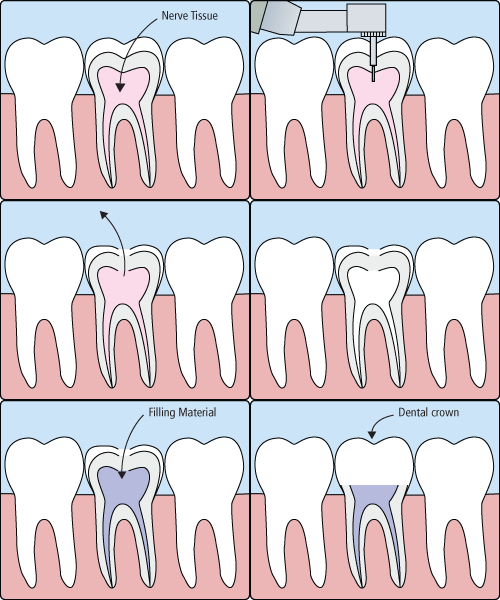 Within each of your teeth is contained both pulp and nerve, and sometimes when a tooth is cracked or has a deep cavity, bacteria creeps in and infects the pulp. This infection, if left untreated, can then result in the build up of pus (called an abscess) around the root tip in the jawbone. An abscess kills the pulp tissue; dead pulp tissue causes pain and swelling, and altogether, a diseased tooth can injure your jawbone and negatively affect your overall health.
Expert Root Canal Treatment
We get it, this process doesn’t sound pleasant, but it’s better than previous options. There was a time the only treatment option would have been to remove the tooth. But today, that’s just not so.
Today, Loudoun Dental Associates can save your tooth with a root canal.
Root canal treatment is a multi-step treatment process during which your Stone Ridge dentist will remove the diseased pulp before irrigating, cleaning, and sealing the pulp chamber and the root canal; all of this is done in just one visit to the office. A root canal performed on one or more posterior teeth might require the placement of a cast crown, in order to strengthen the remaining structure.
After root canal treatment, as long as you take proper care to care for your teeth — with regular brushing, flossing, and routine checkups — your restored tooth will last as long as you do. A root canal is a simple procedure, one that results in little to no discomfort (certainly less than that which the infection caused), and one intended, above all else, to save your smile.
Contact Loudoun Dental Associates to learn more.